
The CVT conversation follows Nissan ownership around like a shadow. If you've done any research before buying or already own one of these vehicles, you've probably read something about it. The reality is more nuanced than most forum posts make it seem, and the most useful question isn't "does Nissan have CVT problems" but rather: what does your specific model use, what does it need to stay healthy, and what should you actually be watching for?
What Is the Xtronic CVT in Nissan Vehicles?
Nissan's transmission of choice across most of its passenger car and crossover lineup is called the Xtronic Continuously Variable Transmission, trademarked as the Xtronic CVT. Unlike a traditional automatic transmission with fixed gear ratios, a CVT continuously varies its transmission ratio. Nissan's Xtronic CVT uses this approach to adjust the relationship between engine speed and vehicle speed.
In practice, a CVT can deliver smooth acceleration and support fuel efficiency. Its driving characteristics differ from those of a conventional multi-speed automatic. It also means the driving feel is different: CVTs have a characteristic "rubber band" sensation under hard acceleration, which is normal behavior and not a sign of a problem.
Which Nissan Models Use a CVT?
Confirmed CVT models (Xtronic CVT):
Confirmed non-CVT models:
The Altima and Sentra are commonly associated with CVT use in prior model years, but buyers should verify their specific trim and model year at nissanusa.com or directly with a Nissan dealer, as configurations can change between generations. The safest check is always the Specs and Trims page for your exact model year on Nissan's official website.
Nissan CVT Warning Signs: What to Actually Watch For
Most CVT issues that reach serious proportions start as smaller symptoms that get ignored. Knowing what warrants a service visit keeps a manageable situation from becoming an expensive one.
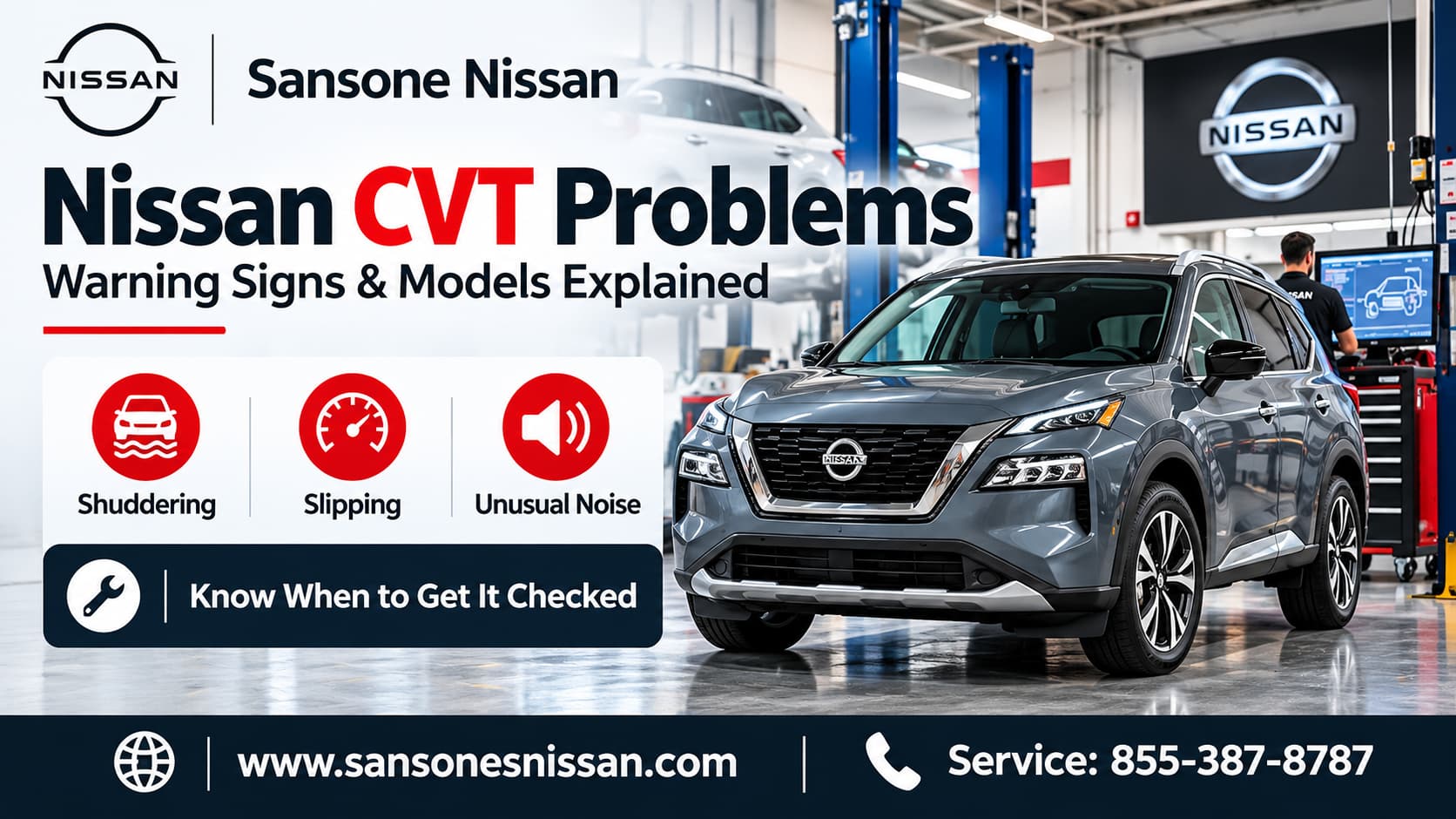
Shuddering or jerking under acceleration. If your vehicle shakes or hesitates when you accelerate from a stop, especially in stop-and-go traffic, the CVT needs attention. This is one of the most common early warning signs that the transmission isn’t working properly and should be looked at by a Nissan-certified technician.
Slipping or a sudden surge in RPM without a corresponding increase in speed. In a healthy CVT, engine RPM does not always increase in direct proportion to vehicle speed. However, an unexpected rise in engine RPM without the expected acceleration can indicate a transmission problem and warrants diagnosis. If the engine RPM goes up but the car doesn’t accelerate at the same rate, the transmission may be slipping and should be diagnosed immediately.
Whining, humming, or unusual noise while driving.CVTs are typically quieter than conventional automatics. If you hear a new or unusual whine or hum, particularly if it changes with vehicle speed or engine RPM, have the vehicle inspected to identify the cause.
Overheating indicators or a burning smell. Overheating or deteriorating CVT fluid can indicate a transmission concern. A burning smell, particularly when accompanied by sluggish performance or other abnormal symptoms, warrants prompt inspection. If you notice something burning from under the hood in combination with sluggish performance, pull over safely and contact your dealership's service department.
Warning lights on the dashboard. The transmission warning light or check engine light can flag CVT-related fault codes. Dismissing these lights and continuing to drive is the fastest way to turn a minor issue into a major repair.
Nissan CVT Maintenance: What the Vehicle Actually Needs
Deferred maintenance can contribute to CVT problems, but transmission failures can have multiple causes. Following Nissan's model-specific maintenance schedule helps keep the transmission properly maintained. Nissan's official ownership resources include a personalized maintenance schedule tool that tailors service intervals to your specific vehicle, mileage, and driving conditions.
Key CVT maintenance considerations based on Nissan's service framework:
CVT fluid condition is the most critical variable. CVT fluid degrades differently from conventional transmission fluid and is not interchangeable with it. Using incorrect fluid or skipping changes is one of the most reliable ways to shorten transmission life. Nissan specifies the correct fluid type for each model; your dealer or owner's manual confirms the interval for your configuration.
Driving conditions affect service intervals. Nissan's maintenance schedule tool factors in whether you drive primarily in city traffic, tow loads, or drive in extreme temperatures. Nissan's recommended CVT fluid inspection and replacement intervals vary by model and driving conditions. New Jersey drivers should follow the maintenance schedule applicable to their vehicle and consult their owner's manual or Nissan dealer if their driving conditions qualify as severe service.
Nissan Express Service has advertised a 27-point vehicle inspection with qualifying oil and filter changes. Inspection availability and the items covered should be confirmed with the servicing dealership. Keeping up with routine service means CVT health is being monitored at every visit rather than only when a problem is already visible.
Extended protection plans are available. Nissan's ownership resources include Extended Protection Plans through Nissan Security+Plus, which can cover powertrain components including the transmission. If you're buying a used Nissan with a CVT and want coverage peace of mind, this is worth discussing with your dealer at the time of purchase.
What to Do If You Notice CVT Warning Signs in NJ
If your Nissan is showing any of the symptoms listed above, the right move is a dealer service visit before the behavior progresses. Nissan-certified technicians have access to brand-specific diagnostic tools, CVT fluid specifications, and any technical guidance issued for your model that independent shops may not.
Trying to push through warning signs to avoid a service visit almost always results in higher repair costs than the initial inspection would have.
Bring Your Nissan to Sansone Nissan in Woodbridge, NJ
Noticing unusual noises, shuddering, delayed acceleration, or other possible CVT warning signs? Schedule a diagnostic appointment with the service team at Sansone Nissan located at 90-100 US Highway 1 North,Woodbridge, NJ 07001. A timely inspection can help identify the cause of these symptoms and determine whether your vehicle needs CVT fluid service or further transmission repairs. For model-specific maintenance recommendations, the team can also help you understand the service requirements for your Nissan.
FAQs
What are the most common Nissan CVT warning signs?
The most frequently reported CVT warning signs include shuddering during acceleration, slipping where RPM rises without a matching increase in speed, unusual whining or humming noises, a burning smell from the transmission area, and dashboard warning lights. Any of these symptoms warrant a service visit rather than continued driving. Catching these signs early gives a Nissan-certified technician the best chance of addressing the issue before it worsens.
Which Nissans have a CVT transmission?
Nissan's current lineup confirms the Xtronic CVT on the 2027 Rogue and 2027 Kicks across all trims. Other models including the Frontier, Pathfinder, and Murano have moved to 9-speed automatics in current configurations. For any specific model year, the Specs and Trims page on nissanusa.com or a conversation with your Nissan dealer is the most reliable source to confirm the exact transmission in your vehicle.
How often does Nissan CVT fluid need to be changed?
Nissan's official maintenance schedule is personalized to your vehicle, mileage, and driving conditions through the maintenance tool at nissanusa.com/maintenance-schedules. CVT fluid change intervals vary by model & driving habits. Drivers in New Jersey may need service sooner than a typical mileage schedule, especially in high-traffic conditions or with seasonal temperature extremes. The owner's manual and a Nissan dealer are your best resources for your particular vehicle.
Can you drive a Nissan with CVT problems?
Continuing to drive with known CVT warning signs, especially shuddering, slipping or burning smells, drastically increases the chance of complete transmission failure and a substantially larger repair bill. The best, and most economical, course of action is to set up a service appointment at the first sign of any of these symptoms rather than waiting for a self-correction.
Does Nissan offer warranty coverage for CVT issues?
Nissan's US factory warranty includes limited powertrain coverage for 5 years or 60,000 miles, whichever comes first, covering the transmission and other specified powertrain components. Nissan Security+Plus Extended Protection Plans may provide additional coverage, subject to the plan's terms, eligibility requirements and exclusions. The details of the coverage will vary depending on the age and mileage of the vehicle and the plan in effect. Discuss your specific situation with a Nissan dealer, particularly if you're buying a used Nissan with a CVT and want extended coverage in place before any issues arise.